The phrase sounds dramatic. "Sitting is the new smoking." When Dr. James Levine of the Mayo Clinic first used it over a decade ago, it raised eyebrows. Surely sitting — something every human does every day, something completely passive — couldn't be in the same conversation as one of the most deadly habits in modern history?
The science has since caught up. And while sitting and smoking are not equivalent in absolute terms, the comparison exists for a reason: both are behaviours that have become so normalised, so structurally embedded in modern life, that most people don't recognise them as threats until the damage is done. This article is about understanding that threat — and what you can do about it today.
"The human body was not designed to sit for eight hours a day. We've built an entire civilisation that requires exactly that."
What the Research Actually Shows
A landmark meta-analysis published in The Lancet in 2016, which analysed data from over one million men and women, found that sitting for more than eight hours per day without physical activity was associated with a mortality risk comparable to that caused by obesity — and elevated to levels approaching those seen in smokers.[1]
A systematic review published in Annals of Internal Medicine (Biswas et al., 2015) found that prolonged sedentary time was independently associated with a 1.18-fold increased risk of cardiovascular death, a 1.17-fold increased risk of cancer death, a 1.91-fold increased risk of type 2 diabetes, and a 1.24-fold increased risk of all-cause mortality — regardless of whether participants also exercised.[2]
That last point deserves emphasis: you cannot exercise your way out of too much sitting. Research by Chau et al. found that each additional hour of daily sitting was associated with a 2% increased risk of all-cause mortality — a rate that more than doubled for adults sitting over seven hours a day — even after accounting for leisure-time physical activity.[3]
A large-scale study on occupational sitting found that individuals who sat most of the day at work had a 34% higher mortality risk from cardiovascular disease compared to those who mostly stood or moved.[4]
What Happens to Your Body When You Sit All Day
Your Metabolism Shuts Down
Within 20–30 minutes of sitting, lipoprotein lipase activity — the enzyme responsible for processing fats in your bloodstream — drops by up to 90%. Your body essentially stops burning fat and switches into storage mode. Blood sugar regulation deteriorates. Insulin sensitivity falls. Over years and decades, this metabolic suppression contributes significantly to type 2 diabetes, obesity, and cardiovascular disease.[5]
Your Cardiovascular System Is Under Strain
When you sit, blood pools in your lower extremities. Circulation slows. The cardiovascular system — designed for upright movement — is working against itself. The risk of deep vein thrombosis (DVT) increases. Blood pressure rises. Those who sit most of the day have over twice the risk of cardiovascular disease compared to those who sit least, according to a meta-analysis by Wilmot et al. (2012).[6]

Your Spine and Musculoskeletal System Deteriorate
Sitting compresses the lumbar discs at a rate 40% higher than standing. Hip flexors shorten and tighten. Glutes become inhibited — a phenomenon sometimes called "gluteal amnesia." The muscles of your posterior chain weaken. Over years of sitting, this creates a cascade of postural dysfunction, chronic low back pain, and reduced mobility that affects quality of life far beyond the workplace. The World Health Organization has ranked physical inactivity as the fourth leading cause of global mortality.[7]
Your Brain Suffers Too
Research published in PLOS ONE found that physical inactivity is associated with reduced medial temporal lobe thickness — the brain region responsible for memory formation and storage. A thinner medial temporal lobe is a known precursor to cognitive decline and Alzheimer's disease. Separate research has linked high sedentary time to significantly increased rates of anxiety and depression, independent of other lifestyle factors.[8]
"Sitting for eight hours a day and going to the gym for one hour does not make you an active person. It makes you a sedentary person who occasionally exercises."
The Smoking Comparison: Is It Fair?
In absolute terms, no — smoking is more dangerous. Research published in the American Journal of Public Health (2018) noted that while excessive sitting increases the risk of premature death and chronic disease by 10–20%, smoking increases the risk of premature death by approximately 180%.[9] The comparison is not meant to be taken literally.
What makes it powerful is the context: smoking was also once considered normal, even healthy. Doctors endorsed it. Office culture normalised it. It took decades of accumulating evidence before society began to treat it as the public health crisis it was. The concern — shared by researchers at Mount Sinai, the Mayo Clinic, and institutions worldwide — is that we are at a similar inflection point with sedentary behaviour. The harm is real, it is cumulative, and most people are not taking it seriously.
What You Can Actually Do About It
1. Break Up Sitting Every 30 Minutes
Research consistently shows that interrupting sitting with short movement breaks — even just standing for 2 minutes every 30 minutes — meaningfully reduces the metabolic and cardiovascular harm. Set a timer. Stand up, walk to the kitchen, do five squats. The interruption matters more than the intensity.
2. Switch to a Standing Desk
A randomised controlled trial published in BMC Public Health (Graves et al., 2015) found that sit-stand workstations reduced workplace sitting time by an average of 94 minutes per day without reducing productivity.[10] For the average desk worker, that is a transformative reduction in daily sedentary time. The key is a height-adjustable desk that makes alternating between sitting and standing effortless — not a fixed standing desk that just replaces one static posture with another.
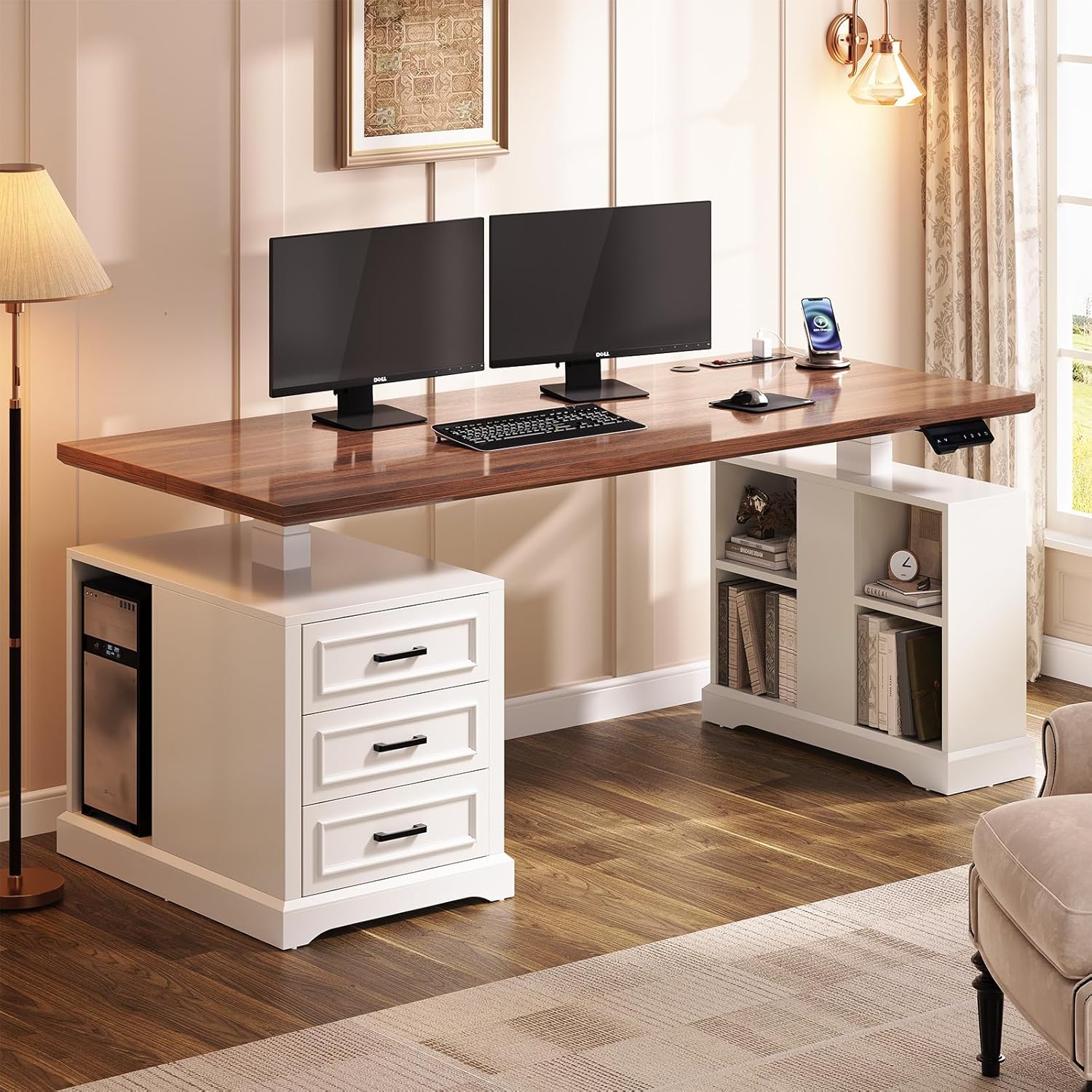
🛒 Recommended Product
SEDETA Electric Standing Desk 63"
Height-adjustable with one-touch controls, 3 drawers, storage shelves, and built-in power outlets. The desk upgrade your back, your metabolism, and your afternoons have been waiting for.
Shop on Amazon →Affiliate link — we may earn a small commission at no cost to you.
3. Get Active Outside Work — On Two Wheels
The Lancet meta-analysis found that 60–75 minutes of moderate-intensity physical activity per day could largely mitigate the mortality risk associated with prolonged sitting.[1] Cycling is one of the most effective and enjoyable ways to hit that target. It's low-impact, scalable in intensity, and gets you outdoors — which adds mental health benefits that indoor exercise simply cannot replicate. A quality mountain bike removes every excuse: it handles varied terrain, fits your fitness level as it improves, and turns a commute or a weekend morning into genuine exercise.

🛒 Recommended Product
Schwinn High Timber Mountain Bike
24–29" wheels, 7 or 21-speeds, front suspension, aluminum and steel frame options for adults, youth, men and women. The antidote to a sedentary lifestyle that doesn't feel like exercise — until you check your heart rate.
Shop on Amazon →Affiliate link — we may earn a small commission at no cost to you.
4. Walk After Every Meal
A 10-minute walk after eating reduces post-meal blood sugar spikes by up to 28% — more effectively than a single 30-minute walk at another time of day, according to research in Sports Medicine (2022).[11] For anyone sitting at a desk for most of the day, this single habit addresses two of the most damaging effects of sedentary behaviour: metabolic dysfunction and excessive continuous sitting.
5. Audit Your Sitting Time Honestly
Most people dramatically underestimate how much they sit. A 2019 study found that adults sitting more than eight hours daily underreported their sitting time by an average of two hours. Track it for one day — commute, desk, meals, sofa, bed. The number will likely surprise you. Awareness is the first intervention.
"You don't need to become an athlete. You need to stop being stationary for 10 hours a day."
The Bottom Line
The "sitting is the new smoking" comparison is not a scare tactic — it's a public health message delivered in the only language that cuts through: urgency. The evidence is clear that prolonged sitting is an independent risk factor for a long list of serious conditions, and that most office workers are well beyond the threshold where those risks become significant.
The good news is that the interventions are simple, accessible, and immediately effective. Stand up more. Break up sitting every 30 minutes. Get a height-adjustable desk. Walk after meals. Cycle at weekends. None of these require a gym membership, a personal trainer, or a dramatic life overhaul. They require decision — and then repetition.
Your chair may be the most dangerous piece of furniture in your home. It's time to use it a little less.
References
- Ekelund U, et al. "Does physical activity attenuate, or even eliminate, the detrimental association of sitting time with mortality? A harmonised meta-analysis of data from more than 1 million men and women." The Lancet. 2016;388(10051):1302–1310. doi:10.1016/S0140-6736(16)30370-1
- Biswas A, et al. "Sedentary time and its association with risk for disease incidence, mortality, and hospitalization in adults: A systematic review and meta-analysis." Annals of Internal Medicine. 2015;162(2):123–132. doi:10.7326/M14-1651
- Chau JY, et al. "Daily sitting time and all-cause mortality: A meta-analysis." PLOS ONE. 2013;8(11):e80000. doi:10.1371/journal.pone.0080000
- Howden Group Health Research. "A large-scale study on occupational sitting and cardiovascular disease mortality risk." 2025. howdengroup.com
- Hamilton MT, Hamilton DG, Zderic TW. "Role of low energy expenditure and sitting in obesity, metabolic syndrome, type 2 diabetes, and cardiovascular disease." Diabetes. 2007;56(11):2655–2667.
- Wilmot EG, et al. "Sedentary time in adults and the association with diabetes, cardiovascular disease and death: Systematic review and meta-analysis." Diabetologia. 2012;55(11):2895–2905.
- World Health Organization. "Physical inactivity: A global public health problem." WHO Global Strategy on Diet, Physical Activity and Health. Geneva: WHO; 2004.
- Siddarth P, et al. "Sedentary behavior associated with reduced medial temporal lobe thickness in middle-aged and older adults." PLOS ONE. 2018;13(4):e0195549.
- Stamatakis E, et al. "Sitting is not the new smoking: An analysis of the claim." American Journal of Public Health. 2018. ajph.aphapublications.org
- Graves L, et al. "Evaluation of sit-stand workstations in an office setting: A randomised controlled trial." BMC Public Health. 2015;15(1):1–14.
- Buffey AJ, et al. "The acute effects of interrupting prolonged sitting time in adults with standing and light-intensity walking on biomarkers of cardiometabolic health." Sports Medicine. 2022;52(8):1765–1787.
Ready to Sit Less? 💼
A standing desk and a bike are two of the highest-ROI investments you can make for your long-term health. Both are on Amazon, both ship fast.
Shop the Standing Desk → Shop the Schwinn Bike →